

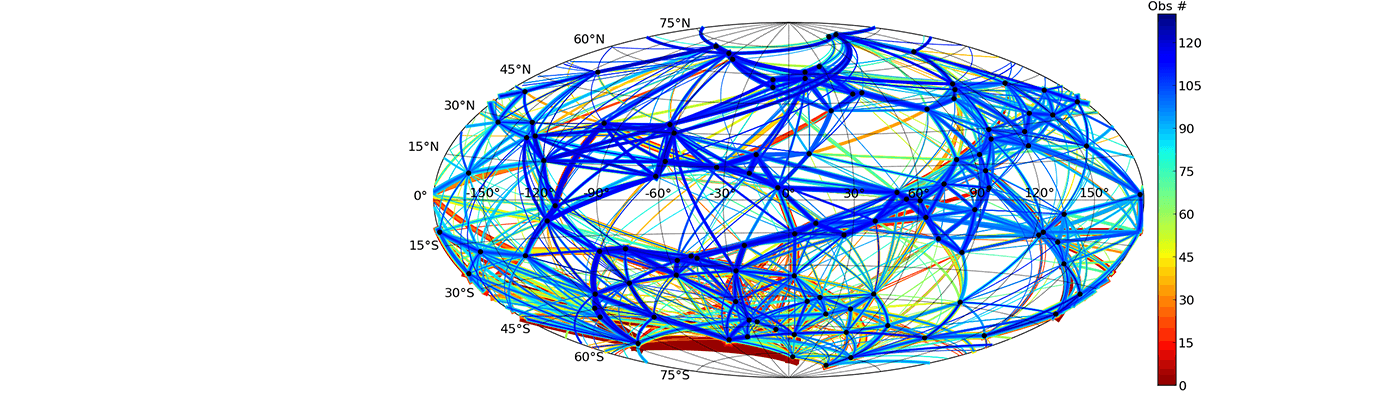
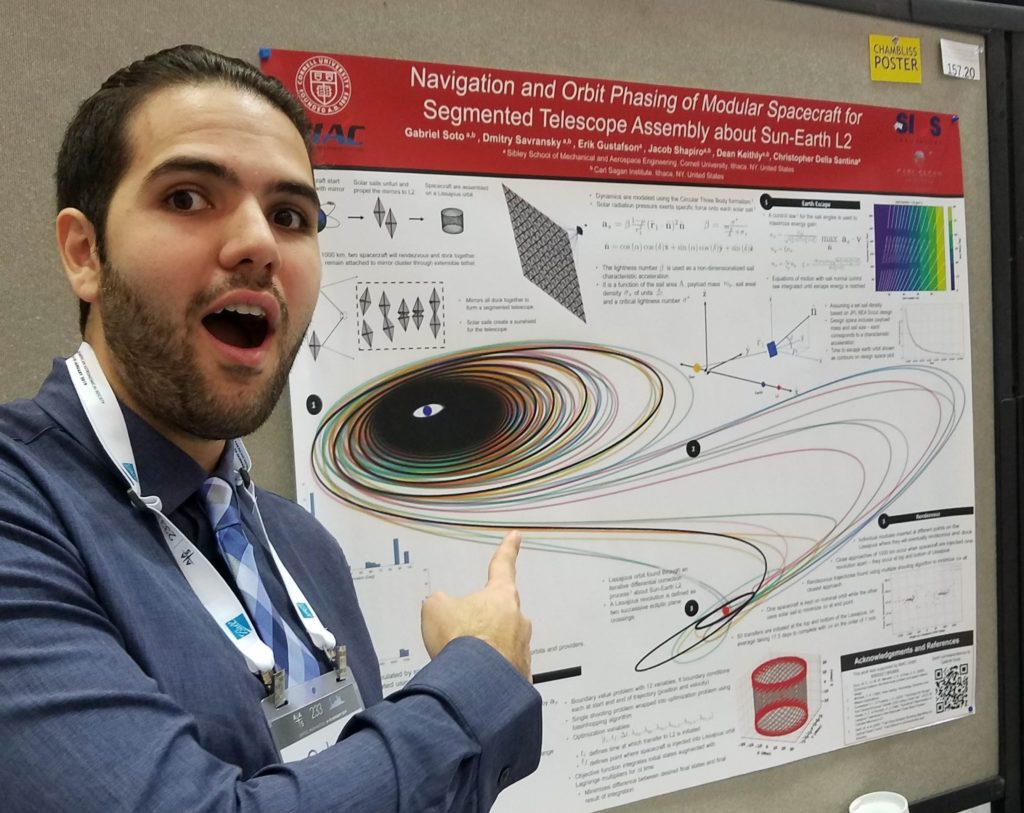
Our lab attended the 233rd AAS Meeting in drizzly Seattle, Washington in early January. Dean Keithly presented his poster titled “Blind Search Single-Visit Exoplanet Direct Imaging Yield for Space Based Telescopes.” Jacob Shapiro presented his poster “Optical Design of a Large Segmented Space Telescope.” Dmitry Savransky presented a talk titled “Simulating Known Exoplanet Orbits for WFIRST CGI Imaging.” Gabriel Soto presented a poster titled “Navigation and Orbit Phasing of Modular Spacecraft for Segmented Telescope Assembly about Sun-Earth L2.”

Congratulations to Jacob Shapiro on Passing his A Exam
Jacob Shapiro successfully passed his A exam, marking his entrance into the dissertation phase of his degree program. His presentation can be viewed here.
Congratulations Dr. Garrett
Daniel Garrett successfully defended his thesis, titled “Exoplanet Direct Imaging Detection Metrics and Exoplanet Populations” on November 20th, 2018. A copy of his presentation can be seen here. Congratulations to Dr. Garrett and the very best of luck in all of his future endeavors.
Prototype Module of Self-Assembling Space Telescope
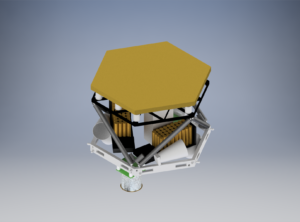
Progress is being made on our 2018 NIAC Modular Active Self-Assembling Space Telescope Swarms! We have managed to draft a potential model of our proposed segment design. This model (while incomplete) demonstrates we can package the key subsystems of a spacecraft into the dimensional constraints of a James Webb Space Telescope (JWST) size mirror. Details are in progress!
PASP Paper Published
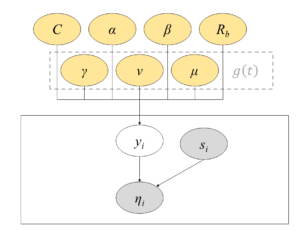 Our new paper titled “Planet occurrence rate density models including stellar effective temperature” has been published in PASP. The paper can be accessed through DOI.
New Paper in Optics and Lasers in Engineering
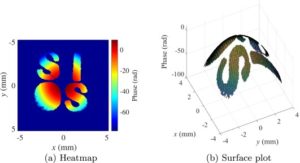 Joyce Fang’s final paper as a graduate student: “Wavefront reconstruction with defocus and transverse shift estimation using Kalman filtering” has been published in Volume 111 of Optics and Lasers in Engineering. Open access available here.
SPIE Astronomical Telescopes + Instrumentation 2018
We attended the SPIE Astronomical Telescopes and Instrumentation conference on June 10th in Austin, TX. Dmitry Savransky presented a talk on his paper “Mining the GPIES Database.” Dean Keithly presented a poster for his paper “Scheduling and Target Selection Optimization for Exoplanet Imaging Spacecraft.” Jacob Shapiro presented a poster for his paper “Common Spatial Pattern Filtering for Imaging of Circumstellar Disks.” Gabriel Soto presented a poster for his paper “Optimal Starshade Observation Scheduling.”
Congratulations to Dr. Fang
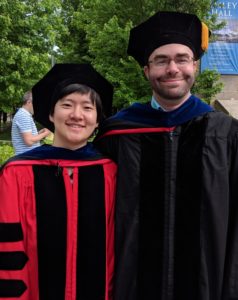
On June 8th, 2018, Joyce Fang successfully defended her PhD thesis, entitled “Online Model-based Estimation for Automated Optical System Alignment and Phase Retrieval Algorithm” Congratulations to Dr. Fang and the very best of luck in all of her future endeavors.
Congratulations SIOSlab Graduates!
Congratulations to all of this year’s SIOSlab graduates, including undergraduate lab alumni Amlan Sinha and Patrick Voorhees, and MEng alumni Michael Wang and Dante Del Terzo. Best of luck in all your future endeavors.
Congratulations also to Gabriel Soto, for being one of this year’s recipients of the Sibley School Excellence in Graduate Teaching Assistant Prize. This prize is based on student feedback and endorsements by instructors, and is awarded to graduate students who have demonstrated dedication and excellence as a teaching assistant in Sibley School courses.
Congratulations to Gabriel Soto on Passing his A Exam!
Gabriel Soto successfully passed his A exam, marking his entrance into the dissertation phase of his degree program. The talk slides are available here.