
Dmitry Savransky
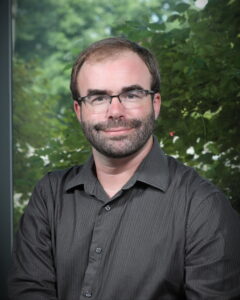 Savransky received his PhD in Mechanical and Aerospace Engineering from Princeton University, where he was a member of the High Contrast Imaging Laboratory. After completing his doctorate in 2011, he became a postdoctoral fellow at the Lawrence Livermore National Laboratory where he assisted in the integration and testing of the Gemini Planet Imager (GPI) and participated in the planning of the GPI Exoplanet Survey (GPIES), for which he serves on the science steering committee. Savransky’s research is comprised of a variety of problems related to the detection and characterization of extrasolar planets. These include investigations of advanced control and estimation for active wavefront control systems; computer vision and machine learning applications for automated optical system alignment and astronomical image post-processing; optimal scheduling for autonomous space observatories and ground-based surveys; and statistical analysis of large astronomical surveys. Full CV.
Office: 451 Upson Hall
Phone: 646-801-9356
Email: ds264 [at] cornell.edu
If you would like to schedule a meeting, please see my public calendar.
If you would like to know how to pronounce my name, see here.
For my gists, see here.
Graduate Students
Grace Genszler
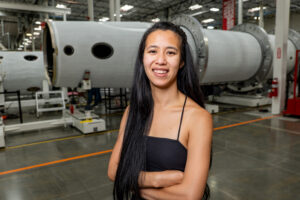 Grace Genszler earned a Bachelor of Arts in Physics from Wheaton College in Massachusetts in May 2018 with a minor in Mathematics. Through a dual degree program with Dartmouth College, she also earned a Bachelor of Engineering with a concentration in Computational Sciences in June 2019. For her honors thesis at Wheaton, she studied the numerical modeling of tethered satellite system dynamics. At Dartmouth, she worked on a design for a Martian greenhouse to support a crewed mission for her capstone. This project won NASA’s 2019 BIG Idea Challenge. After taking a gap year to work in an artisanal bakery, she joined the SIOS lab to do research on trajectory design and mission planning in the fall of 2020 as a Ph.D. student. In 2022 she was awarded a Matthew Isakowitz Fellowship and her host company was Virgin Orbit. She was later awarded an Amelia Earhart Fellowship in 2023.
Colby Merrill
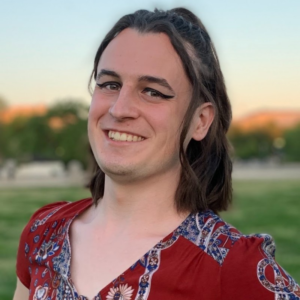 Colby (they/them/theirs) earned a Bachelor of Science in Aerospace Engineering from the University of Maryland in College Park. They are a collaborator on the NASA DART Investigation Team and ESA Hera Science Team. They joined the SIOS lab during fall 2022 and currently research problems at the nexus of astrodynamics and planetary science with a focus on small body dynamics. Some recent highlights have been presenting an original mission design at JHU/APL and the United Nations at the 8th International Planetary Defense Conference. Outside of academics, they read many science fiction novels, play the guitar, and explore the outdoors (rarely all at once).
Aiden Zelakiewicz
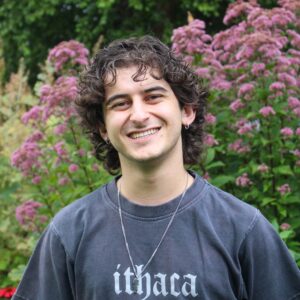
Aiden Zelakiewicz (he/him/his) earned his Bachelor of Science in Astronomy & Astrophysics at The Ohio State University, where he worked on extinction mapping for the Nancy Grace Roman Space Telescope‘s Galactic Bulge Time Domain Survey. Aiden currently works on the Habitable Worlds Observatory (HWO), NASA’s next flagship-class space telescope designed to detect Earth-like planets around Sun-like stars. He combines mission design concepts with atmospheric models of Earth-like exoplanets to simulate observations and ultimately determine the surface and atmospheric composition through a technique called retrievals. He can often be found rock climbing, practicing guitar, or playing video games.
Isabela Huckabee
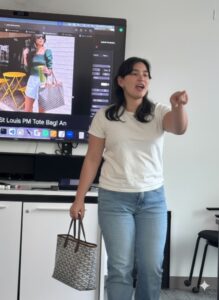 Isabela (Izzy) Huckabee (she/her) earned her B.S in Astrophysics from Arizona State University. Before coming to Cornell, she spent a gap year at Ateneo de Manila University in the Philippines working on astronomy education and outreach. Izzy currently works on creating forward models of solar system and exoplanetary atmospheres for mission development. She can often be found heckling Aiden while he rock climbs, not playing guitar, arguing with Dmitry about the merits of Star Trek: Discovery, and making tiny fish trinkets out of tiny beads (always all at once).
Saanika Choudhary
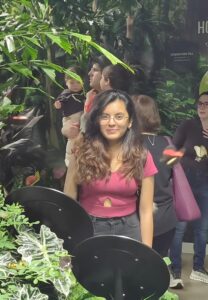 Saanika Choudhary (she/her) has a Bachelor of Technology in Engineering Physics from IIT Bombay, India, and a Master of Science in Physics from Northwestern University. For her Master’s thesis, she worked on using deep-learning algorithms for efficient orbital determination and characterized how increased orbital coverage improves our inferences on orbital parameters. Saanika currently works on the Nancy Grace Roman Space Telescope with a focus in astrostatistics. In her free time, she likes to read mystery novels, solve puzzles, crochet, and occasionally go for a hike.
Rifah Tasnim
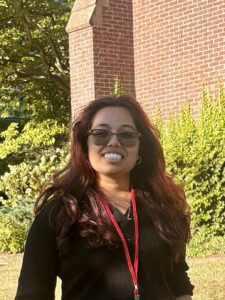 Rifah Tasnim (she/her) earned her Bachelor of Science in Mechanical Engineering from New York University and her Master of Science in Management Science and Engineering from Columbia University. Right after she joined NASA’s Johnson Space Center as a researcher in the Systems Engineering division, where she developed physics-informed machine learning models and integrated them into SysML-based MBSE frameworks to help build digital twins for the VIPER mission on the Moon. Rifah joined the SIOS Lab in Fall 2025 and now contributes to support efforts for the Roman Space Telescope. In her free time, she enjoys painting and drawing, with acrylic and charcoal as her preferred mediums.
Jayden Ripic
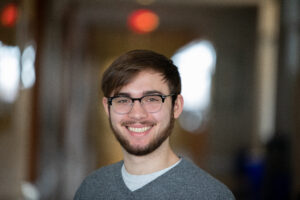
Jayden earned his Bachelor of Science in Aerospace Engineering from the University at Buffalo. While in Buffalo, he worked in the Technology and Advanced Pursuits group at Moog Inc., developing a novel AI tracker-controller for military ground vehicles. Since joining the SIOS Lab, Jayden has been working on extending the capabilities of the EXOSIMS software. In his free time, he enjoys playing French horn in the Cornell Symphony Orchestra, watching the Patriots win the Superbowl, and beating his friends at squash.
Graduate Alumni
Christian Delacroix – Postdoc (2015 – 2017)
Joyce Fang – PhD (2014 – 2018; Dissertation: Online Model-Based Estimation for Automated Optical System Alignment and Phase Retrieval Algorithm)
Daniel Garrett – PhD (2015 – 2018; Dissertation: Exoplanet Direct Imaging Detection Metrics and Exoplanet Populations)
Gabriel Soto – PhD (2016 – 2020; Dissertation: Orbital Design Tools and Scheduling Techniques for Optimizing Space Science and Exoplanet-Finding Missions)
Jacob Shapiro – PhD (2016 – 2020; Dissertation: Using Modern Mathematical and Computational Tools for Image Processing)
Wenbo Lou – MS (2018 – 2021; Thesis: Design of High Precision Indoor Localization Algorithm with Kalman Filter and Motion Control Scheme for an Autonomous Mobile Robot)
Dean Keithly – PhD (2016 – 2021; Dissertation: Evaluating and Scheduling Exoplanet Direct Imaging Missions)
Kaitlyn Summey – MS (2019-2022; Thesis: Defining Pupil Knowledge Requirements for Roman Space Telescope Integrated Payload Assembly Testing)
Zvonimir Stojanovski – PhD (2020 – 2023; Dissertation: Nonlinear Filtering with Applications to Astrodynamics)
Corey Spohn – PhD (2018 – 2023; Dissertation: Planning Direct Imaging Observations of Exoplanet with Precursor Data)
Duan Li – PhD (2018 – 2025; Dissertation: Focal Plane Wavefront Sensing and Control for Various Optical Systems)
Rachel Oliver – PhD (2020 – 2024; Dissertation: An Event-Based Vision Sensor Simulation Framework for Space Domain Awareness Applications)
Jackson Kulik – PhD (2020 – 2024; Dissertation: Linear and Multilinear Methods for Guidance, Navigation, and Control of Satellite Formation Flight)
MEng Students
Aastha Acharya (2014 – 2015; Final Report)
Allegra Moran (2016 – 2017; co-advised with Daniel Selva; Final Report)
James Lee (2016 – 2017; Final Report)
Willard Andrews and Daniel Wilentz (2016 – 2017; Final Report; Code)
Dane Del Terzo (2017 – 2018; Final Report)
Michael Wang (2017 – 2018; Final Report; Code)
Jeremy Turner (2018 – 2019; Final Report)
Erik Gustafson (2018 – 2019; Final Report)
Zijie Chen, Hyunji Kim, and Alex Zhou (2018 – 2019; Final Report)
Ryan Gao and Seth McCall (2018 – 2019; Final Report)
Kevin Liu (2018 – 2019; Final Report )
Becca Lublin (2019; Final Report)
Xiaotian Liu (2018-2019; Final Report)
Jason Ochs and Christopher Della Santina (2019 – 2020; Final Report)
Hansheng Zhang (2019 – 2020; Final Report)
Yuetong Liu (2019 – 2020; Final Report)
Phil Si (2019 – 2020; Final Report)
Sam Feibel and Nathaniel Kinzly (2020; Final Report)
Sarah Richter (2021; Final Report)
Thomas Taffe and Van Cates(2021; Final Report)
Jayson Figueroa (2021; Final Report)
Brynn Szczesniak (2021)
Evan Wilt (2021 – 2022; Final Report)
Max Yasgur (2022; Final Report)
Matthew Bryan (2023-2024; Final Report)
Anna Boese (2023-2024)
Undergraduate Researchers
James Haber and Alexandra Voinea (Summer 2015)
Amlan Sinha (2016 – 2017)
Patrick Voorhees (Summer 2016)
Nikhil Ranganathan (2016 – 2017; 2019; Senior Design)
Jeremy Iver (Summer 2017)
Xinwei Liu (2017 – 2018)
Niharika Shukla (2017 – 2018)
Aaron Brown (2017 – 2018)
Anthony Aguilar (2019; Senior Design)
Christopher Della Santina (2017 – 2019)
Jose De La Pena (Summer 2019; LSAMP REU)
Nathaniel Kinzly (2018 – 2020; Senior Design)
Carlos Gascón Álvarez (2019; Visiting UPC Student; Thesis)
Sparsh Gupta (2019)
Bryan Zin (2019)
Xuechun (Bob) Qian (2019 – 2020)
Robert Whitney (2019 – 2020; Senior Design)
Christian Harris (Summer 2020; Astronomy REU)
Shreyasvi Gowda (2020)
Aparajito Saha and Krithik Ranjan (2020)
Evan Wilt (2020 – 2021)
Max Yasgur (2021)
Owen Sorber (2021)
Erik Payton (2024)
Cedric Orton-Urbina (2022- 2023)
Veronica Sergeeva (Fall 2024)
Maxwell Zweig (2023- 2024)
Mira Ahuja (2023- 2024)
Andrew Chiu (2023- 2024)
Jack Crespo (2024)
The SIOSlab logo was designed by Claire Koch.